
LangNation
Courses Browse courses Regular One-to-one Intensive Placement test
Exams Exam papers Study material Einbürgerungstest
Germany Living and studying in Germany Study in Germany The German school system Your first weeks Working in Germany
Tools German grade ECTS credits Overall band TOEFL ⇄ IELTS converter
About us About Events Gallery Blog FAQ
Contact Request a call back Deutsch
  1. Frage 61 Leben in der Demokratie

    Was bedeutet "Volkssouveränität"?

    1. Die Königin/der König herrscht über das Volk.
    2. Das Bundesverfassungsgericht steht über der Verfassung.
    3. Die Interessenverbände üben die Souveränität zusammen mit der Regierung aus.
    4. Die Staatsgewalt geht vom Volke aus. richtig
    In English

    What does "popular sovereignty" mean?

    1. A The king or queen rules over the people.
    2. B The Federal Constitutional Court stands above the constitution.
    3. C Interest groups exercise sovereignty together with the government.
    4. D All state authority comes from the people.

    Unofficial translation, to help you read the question. Only the German wording counts in the exam.

    Warum? Volkssouveränität heißt: Die Macht im Staat kommt vom Volk, nicht von einem König, einem Gericht oder einem Verband. Art. 20 Abs. 2 GG
  2. Frage 62 Leben in der Demokratie

    Wenn das Parlament eines deutschen Bundeslandes gewählt wird, nennt man das …

    1. Kommunalwahl
    2. Landtagswahl richtig
    3. Europawahl
    4. Bundestagswahl
    In English

    When the parliament of a German Bundesland is elected, that is called a …

    1. A local election (Kommunalwahl)
    2. B state election (Landtagswahl)
    3. C European election (Europawahl)
    4. D federal election (Bundestagswahl)

    Unofficial translation, to help you read the question. Only the German wording counts in the exam.

    Warum? Landtagswahl ist die Wahl des Landesparlaments. Kommunalwahl gilt der Gemeinde, Bundestagswahl dem Bund, Europawahl der EU.

  3. Frage 63 Leben in der Demokratie

    Was gehört in Deutschland nicht zur Exekutive?

    1. die Polizei
    2. die Gerichte richtig
    3. das Finanzamt
    4. die Ministerien
    In English

    Which of these is not part of the executive in Germany?

    1. A the police
    2. B the courts
    3. C the tax office
    4. D the ministries

    Unofficial translation, to help you read the question. Only the German wording counts in the exam.

    Warum? Die Exekutive führt aus: Regierung, Ministerien, Polizei, Ämter. Die Gerichte sind die Judikative und ausdrücklich unabhängig.

  4. Frage 64 Leben in der Demokratie

    Die Bundesrepublik Deutschland ist heute gegliedert in …

    1. vier Besatzungszonen.
    2. einen Oststaat und einen Weststaat.
    3. 16 Kantone.
    4. Bund, Länder und Kommunen. richtig
    In English

    The Federal Republic of Germany today is divided into …

    1. A four occupation zones.
    2. B an eastern state and a western state.
    3. C 16 cantons.
    4. D the federation, the states and the municipalities.

    Unofficial translation, to help you read the question. Only the German wording counts in the exam.

    Warum? Drei Ebenen: der Bund, die 16 Länder und die Kommunen. Die Besatzungszonen gab es nur 1945 bis 1949.

  5. Frage 65 Leben in der Demokratie

    Es gehört nicht zu den Aufgaben des Deutschen Bundestages, …

    1. Gesetze zu entwerfen.
    2. die Bundesregierung zu kontrollieren.
    3. die Bundeskanzlerin/den Bundeskanzler zu wählen.
    4. das Bundeskabinett zu bilden. richtig
    In English

    It is not one of the tasks of the German Bundestag to …

    1. A draft laws.
    2. B scrutinise the federal government.
    3. C elect the Federal Chancellor.
    4. D form the federal cabinet.

    Unofficial translation, to help you read the question. Only the German wording counts in the exam.

    Warum? Der Bundestag wählt zwar die Kanzlerin oder den Kanzler, aber das Kabinett stellt diese selbst zusammen; ernannt wird es vom Bundespräsidenten.

  6. Frage 66 Leben in der Demokratie

    Welche Städte haben die größten jüdischen Gemeinden in Deutschland?

    1. Berlin und München richtig
    2. Hamburg und Essen
    3. Nürnberg und Stuttgart
    4. Worms und Speyer
    In English

    Which cities have the largest Jewish communities in Germany?

    1. A Berlin and Munich
    2. B Hamburg and Essen
    3. C Nuremberg and Stuttgart
    4. D Worms and Speyer

    Unofficial translation, to help you read the question. Only the German wording counts in the exam.

    Warum? Berlin und München haben die größten jüdischen Gemeinden Deutschlands. Worms und Speyer sind historisch bedeutend, heute aber klein.

  7. Frage 67 Leben in der Demokratie

    Was ist in Deutschland vor allem eine Aufgabe der Bundesländer?

    1. Verteidigungspolitik
    2. Außenpolitik
    3. Wirtschaftspolitik
    4. Schulpolitik richtig
    In English

    In Germany, which of these is above all a task of the Bundesländer?

    1. A defence policy
    2. B foreign policy
    3. C economic policy
    4. D school policy

    Unofficial translation, to help you read the question. Only the German wording counts in the exam.

    Warum? Schule und Bildung sind Ländersache; Außen-, Verteidigungs- und weitgehend die Wirtschaftspolitik macht der Bund.

  8. Frage 68 Leben in der Demokratie

    Warum kontrolliert der Staat in Deutschland das Schulwesen?

    1. weil es in Deutschland nur staatliche Schulen gibt
    2. weil alle Schülerinnen und Schüler einen Schulabschluss haben müssen
    3. weil es in den Bundesländern verschiedene Schulen gibt
    4. weil es nach dem Grundgesetz seine Aufgabe ist richtig
    In English

    Why does the state supervise the school system in Germany?

    1. A because there are only state schools in Germany
    2. B because every pupil must have a school-leaving qualification
    3. C because there are different kinds of school in the Bundesländer
    4. D because the Basic Law makes it the state's responsibility

    Unofficial translation, to help you read the question. Only the German wording counts in the exam.

    Warum? Das Grundgesetz stellt das gesamte Schulwesen unter die Aufsicht des Staates. Art. 7 Abs. 1 GG

  9. Frage 69 Leben in der Demokratie

    Die Bundesrepublik Deutschland hat einen dreistufigen Verwaltungsaufbau. Wie heißt die unterste politische Stufe?

    1. Stadträte
    2. Landräte
    3. Gemeinden richtig
    4. Bezirksämter
    In English

    The Federal Republic of Germany has a three-tier administrative structure. What is the lowest political tier called?

    1. A city councils
    2. B district administrators
    3. C municipalities (Gemeinden)
    4. D district offices

    Unofficial translation, to help you read the question. Only the German wording counts in the exam.

    Warum? Bund, Land, Gemeinde — die Gemeinde ist die unterste Stufe und die nächste am Wohnort.

  10. Frage 70 Leben in der Demokratie

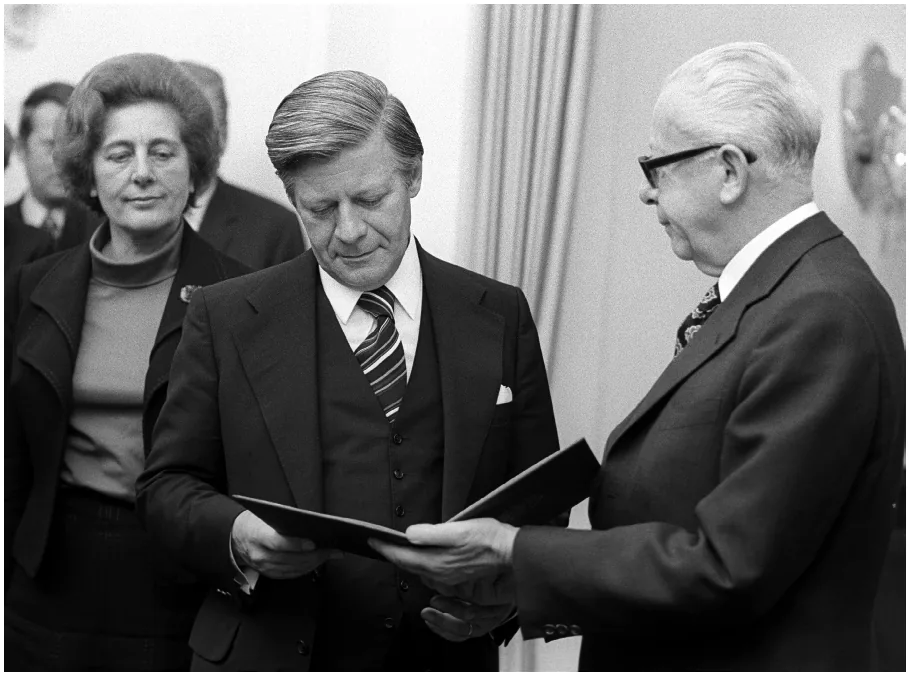
    Der deutsche Bundespräsident Gustav Heinemann gibt Helmut Schmidt 1974 die Ernennungsurkunde zum deutschen Bundeskanzler. Was gehört zu den Aufgaben der deutschen Bundespräsidentin/des deutschen Bundespräsidenten?

    Abbildung zu Frage 70

    © Bundesregierung/Engelbert Reineke

    1. Sie/Er führt die Regierungsgeschäfte.
    2. Sie/Er kontrolliert die Regierungspartei.
    3. Sie/Er wählt die Ministerinnen/Minister aus.
    4. Sie/Er schlägt die Kanzlerin/den Kanzler zur Wahl vor. richtig
    In English

    In 1974 German Federal President Gustav Heinemann hands Helmut Schmidt his certificate of appointment as Federal Chancellor. Which of these is one of the tasks of the German Federal President?

    1. A He or she runs the business of government.
    2. B He or she supervises the governing party.
    3. C He or she selects the ministers.
    4. D He or she proposes the Chancellor for election.

    Unofficial translation, to help you read the question. Only the German wording counts in the exam.

    Warum? Die Bundespräsidentin oder der Bundespräsident schlägt dem Bundestag die Kanzlerkandidatin oder den Kanzlerkandidaten vor und ernennt anschließend. Regiert wird nicht. Art. 63 GG

  11. Frage 71 Leben in der Demokratie

    Wo hält sich die deutsche Bundeskanzlerin/der deutsche Bundeskanzler am häufigsten auf? Am häufigsten ist sie/er …

    1. in Bonn, weil sich dort das Bundeskanzleramt und der Bundestag befinden.
    2. auf Schloss Meseberg, dem Gästehaus der Bundesregierung, um Staatsgäste zu empfangen.
    3. auf Schloss Bellevue, dem Amtssitz der Bundespräsidentin/des Bundespräsidenten, um Staatsgäste zu empfangen.
    4. in Berlin, weil sich dort das Bundeskanzleramt und der Bundestag befinden. richtig
    In English

    Where is the German Federal Chancellor most often to be found? Most often he or she is …

    1. A in Bonn, because the Federal Chancellery and the Bundestag are there.
    2. B at Schloss Meseberg, the federal government's guest house, receiving state guests.
    3. C at Schloss Bellevue, the Federal President's official residence, receiving state guests.
    4. D in Berlin, because the Federal Chancellery and the Bundestag are there.

    Unofficial translation, to help you read the question. Only the German wording counts in the exam.

    Warum? Regierungssitz ist Berlin: dort stehen Bundeskanzleramt und Bundestag.

  12. Frage 72 Leben in der Demokratie

    Wie heißt die jetzige Bundeskanzlerin/der jetzige Bundeskanzler von Deutschland?

    1. Gerhard Schröder
    2. Angela Merkel
    3. Ursula von der Leyen
    4. Friedrich Merz richtig
    In English

    What is the name of Germany's current Federal Chancellor?

    1. A Gerhard Schröder
    2. B Angela Merkel
    3. C Ursula von der Leyen
    4. D Friedrich Merz

    Unofficial translation, to help you read the question. Only the German wording counts in the exam.

    Warum? Die Kanzlerin oder der Kanzler wird vom Bundestag gewählt und wechselt mit den Mehrheiten. Prüfe kurz vor der Prüfung, wer gerade im Amt ist.

  13. Frage 73 Leben in der Demokratie

    Die beiden größten Fraktionen im Deutschen Bundestag heißen zurzeit …

    1. CDU/CSU und AfD. richtig
    2. Die Linke und Bündnis 90/Die Grünen.
    3. Bündnis 90/Die Grünen und SPD.
    4. Die Linke und CDU/CSU.
    In English

    The two largest parliamentary groups in the German Bundestag are currently …

    1. A CDU/CSU and AfD.
    2. B Die Linke and Bündnis 90/Die Grünen.
    3. C Bündnis 90/Die Grünen and SPD.
    4. D Die Linke and CDU/CSU.

    Unofficial translation, to help you read the question. Only the German wording counts in the exam.

    Warum? Welche Fraktionen die größten sind, entscheidet jede Bundestagswahl neu. Prüfe den Stand kurz vor der Prüfung.

  14. Frage 74 Leben in der Demokratie

    Wie heißt das Parlament für ganz Deutschland?

    1. Bundesversammlung
    2. Volkskammer
    3. Bundestag richtig
    4. Bundesgerichtshof
    In English

    What is the parliament for the whole of Germany called?

    1. A Bundesversammlung
    2. B Volkskammer
    3. C Bundestag
    4. D Bundesgerichtshof

    Unofficial translation, to help you read the question. Only the German wording counts in the exam.

    Warum? Der Bundestag ist das Parlament für ganz Deutschland. Die Bundesversammlung tritt nur zur Wahl des Bundespräsidenten zusammen.

  15. Frage 75 Leben in der Demokratie

    Wie heißt Deutschlands heutiges Staatsoberhaupt?

    1. Frank-Walter Steinmeier richtig
    2. Bärbel Bas
    3. Bodo Ramelow
    4. Joachim Gauck
    In English

    Who is Germany's head of state today?

    1. A Frank-Walter Steinmeier
    2. B Bärbel Bas
    3. C Bodo Ramelow
    4. D Joachim Gauck

    Unofficial translation, to help you read the question. Only the German wording counts in the exam.

    Warum? Staatsoberhaupt ist die Bundespräsidentin oder der Bundespräsident, gewählt von der Bundesversammlung für fünf Jahre. Prüfe kurz vor der Prüfung, wer im Amt ist.

  16. Frage 76 Leben in der Demokratie

    Was bedeutet die Abkürzung CDU in Deutschland?

    1. Christliche Deutsche Union
    2. Club Deutscher Unternehmer
    3. Christlicher Deutscher Umweltschutz
    4. Christlich Demokratische Union richtig
    In English

    What does the abbreviation CDU stand for in Germany?

    1. A Christliche Deutsche Union
    2. B Club Deutscher Unternehmer
    3. C Christlicher Deutscher Umweltschutz
    4. D Christlich Demokratische Union (Christian Democratic Union)

    Unofficial translation, to help you read the question. Only the German wording counts in the exam.

    Warum? Christlich Demokratische Union. Sie tritt in Bayern nicht an — dort gibt es die CSU.

  17. Frage 77 Leben in der Demokratie

    Was ist die Bundeswehr?

    1. die deutsche Polizei
    2. ein deutscher Hafen
    3. eine deutsche Bürgerinitiative
    4. die deutsche Armee richtig
    In English

    What is the Bundeswehr?

    1. A the German police
    2. B a German port
    3. C a German citizens' initiative
    4. D the German army

    Unofficial translation, to help you read the question. Only the German wording counts in the exam.

    Warum? Die Bundeswehr ist die Armee der Bundesrepublik. Sie untersteht dem Parlament: Auslandseinsätze muss der Bundestag beschließen.

  18. Frage 78 Leben in der Demokratie

    Was bedeutet die Abkürzung SPD?

    1. Sozialistische Partei Deutschlands
    2. Sozialpolitische Partei Deutschlands
    3. Sozialdemokratische Partei Deutschlands richtig
    4. Sozialgerechte Partei Deutschlands
    In English

    What does the abbreviation SPD stand for?

    1. A Sozialistische Partei Deutschlands
    2. B Sozialpolitische Partei Deutschlands
    3. C Sozialdemokratische Partei Deutschlands (Social Democratic Party of Germany)
    4. D Sozialgerechte Partei Deutschlands

    Unofficial translation, to help you read the question. Only the German wording counts in the exam.

    Warum? Sozialdemokratische Partei Deutschlands, gegründet 1863 und damit die älteste noch bestehende Partei Deutschlands.

  19. Frage 79 Leben in der Demokratie

    Was bedeutet die Abkürzung FDP in Deutschland?

    1. Friedliche Demonstrative Partei
    2. Freie Deutschland Partei
    3. Führende Demokratische Partei
    4. Freie Demokratische Partei richtig
    In English

    What does the abbreviation FDP stand for in Germany?

    1. A Friedliche Demonstrative Partei
    2. B Freie Deutschland Partei
    3. C Führende Demokratische Partei
    4. D Freie Demokratische Partei (Free Democratic Party)

    Unofficial translation, to help you read the question. Only the German wording counts in the exam.

    Warum? Freie Demokratische Partei — die liberale Partei.

  20. Frage 80 Leben in der Demokratie

    Welches Gericht in Deutschland ist zuständig für die Auslegung des Grundgesetzes?

    1. Oberlandesgericht
    2. Amtsgericht
    3. Bundesverfassungsgericht richtig
    4. Verwaltungsgericht
    In English

    Which court in Germany is responsible for interpreting the Basic Law?

    1. A Higher Regional Court (Oberlandesgericht)
    2. B Local Court (Amtsgericht)
    3. C Federal Constitutional Court (Bundesverfassungsgericht)
    4. D Administrative Court (Verwaltungsgericht)

    Unofficial translation, to help you read the question. Only the German wording counts in the exam.

    Warum? Über die Auslegung des Grundgesetzes entscheidet allein das Bundesverfassungsgericht in Karlsruhe. Auch Bürgerinnen und Bürger können es anrufen.

  21. Frage 81 Leben in der Demokratie

    Wer wählt die Bundeskanzlerin/den Bundeskanzler in Deutschland?

    1. der Bundesrat
    2. die Bundesversammlung
    3. das Volk
    4. der Bundestag richtig
    In English

    Who elects the Federal Chancellor in Germany?

    1. A the Bundesrat
    2. B the Federal Convention (Bundesversammlung)
    3. C the people
    4. D the Bundestag

    Unofficial translation, to help you read the question. Only the German wording counts in the exam.

    Warum? Der Bundestag wählt die Kanzlerin oder den Kanzler — nicht das Volk und nicht der Bundesrat. Art. 63 GG

  22. Frage 82 Leben in der Demokratie

    Wer leitet das deutsche Bundeskabinett?

    1. die Bundestagspräsidentin/der Bundestagspräsident
    2. die Bundespräsidentin/der Bundespräsident
    3. die Bundesratspräsidentin/der Bundesratspräsident
    4. die Bundeskanzlerin/der Bundeskanzler richtig
    In English

    Who leads the German federal cabinet?

    1. A the President of the Bundestag
    2. B the Federal President
    3. C the President of the Bundesrat
    4. D the Federal Chancellor

    Unofficial translation, to help you read the question. Only the German wording counts in the exam.

    Warum? Die Kanzlerin oder der Kanzler leitet das Kabinett und bestimmt die Richtlinien der Politik. Art. 65 GG

  23. Frage 83 Leben in der Demokratie

    Wer wählt die deutsche Bundeskanzlerin/den deutschen Bundeskanzler?

    1. das Volk
    2. die Bundesversammlung
    3. der Bundestag richtig
    4. die Bundesregierung
    In English

    Who elects the German Federal Chancellor?

    1. A the people
    2. B the Federal Convention (Bundesversammlung)
    3. C the Bundestag
    4. D the federal government

    Unofficial translation, to help you read the question. Only the German wording counts in the exam.

    Warum? Dieselbe Frage wie Nr. 81: Gewählt wird die Kanzlerin oder der Kanzler vom Bundestag. Art. 63 GG

  24. Frage 84 Leben in der Demokratie

    Welche Hauptaufgabe hat die deutsche Bundespräsidentin/der deutsche Bundespräsident? Sie/Er …

    1. regiert das Land.
    2. entwirft die Gesetze.
    3. repräsentiert das Land. richtig
    4. überwacht die Einhaltung der Gesetze.
    In English

    What is the main task of the German Federal President? He or she …

    1. A governs the country.
    2. B drafts the laws.
    3. C represents the country.
    4. D monitors compliance with the law.

    Unofficial translation, to help you read the question. Only the German wording counts in the exam.

    Warum? Das Staatsoberhaupt repräsentiert das Land nach innen und außen. Regiert wird von der Bundesregierung.

  25. Frage 85 Leben in der Demokratie

    Wer bildet den deutschen Bundesrat?

    1. die Abgeordneten des Bundestages
    2. die Ministerinnen und Minister der Bundesregierung
    3. die Regierungsvertreter der Bundesländer richtig
    4. die Parteimitglieder
    In English

    Who makes up the German Bundesrat?

    1. A the members of the Bundestag
    2. B the ministers of the federal government
    3. C the government representatives of the Bundesländer
    4. D party members

    Unofficial translation, to help you read the question. Only the German wording counts in the exam.

    Warum? Im Bundesrat sitzen Mitglieder der Landesregierungen, nicht gewählte Abgeordnete. So wirken die Länder an der Bundesgesetzgebung mit. Art. 51 GG

  26. Frage 86 Leben in der Demokratie

    Wer wählt in Deutschland die Bundespräsidentin/den Bundespräsidenten?

    1. die Bundesversammlung richtig
    2. der Bundesrat
    3. das Bundesparlament
    4. das Bundesverfassungsgericht
    In English

    Who elects the Federal President in Germany?

    1. A the Federal Convention (Bundesversammlung)
    2. B the Bundesrat
    3. C the federal parliament
    4. D the Federal Constitutional Court

    Unofficial translation, to help you read the question. Only the German wording counts in the exam.

    Warum? Die Bundesversammlung tritt nur dafür zusammen: alle Bundestagsabgeordneten plus ebenso viele Vertreterinnen und Vertreter der Länder. Art. 54 GG

  27. Frage 87 Leben in der Demokratie

    Wer ist das Staatsoberhaupt der Bundesrepublik Deutschland?

    1. die Bundeskanzlerin/der Bundeskanzler
    2. die Bundespräsidentin/der Bundespräsident richtig
    3. die Bundesratspräsidentin/der Bundesratspräsident
    4. die Bundestagspräsidentin/der Bundestagspräsident
    In English

    Who is the head of state of the Federal Republic of Germany?

    1. A the Federal Chancellor
    2. B the Federal President
    3. C the President of the Bundesrat
    4. D the President of the Bundestag

    Unofficial translation, to help you read the question. Only the German wording counts in the exam.

    Warum? Staatsoberhaupt ist die Bundespräsidentin oder der Bundespräsident. Regierungschefin oder Regierungschef ist die Kanzlerin oder der Kanzler.

  28. Frage 88 Leben in der Demokratie

    Die parlamentarische Opposition im Deutschen Bundestag …

    1. kontrolliert die Regierung. richtig
    2. entscheidet, wer Bundesministerin/Bundesminister wird.
    3. bestimmt, wer im Bundesrat sitzt.
    4. schlägt die Regierungschefinnen/Regierungschefs der Länder vor.
    In English

    The parliamentary opposition in the German Bundestag …

    1. A scrutinises the government.
    2. B decides who becomes a federal minister.
    3. C determines who sits in the Bundesrat.
    4. D proposes the heads of government of the Bundesländer.

    Unofficial translation, to help you read the question. Only the German wording counts in the exam.

    Warum? Die Opposition kontrolliert die Regierung: Sie fragt nach, kritisiert öffentlich und kann Untersuchungsausschüsse verlangen.

  29. Frage 89 Leben in der Demokratie

    Wie nennt man in Deutschland die Vereinigung von Abgeordneten einer Partei im Parlament?

    1. Verband
    2. Ältestenrat
    3. Fraktion richtig
    4. Opposition
    In English

    In Germany, what is the group of members of one party in parliament called?

    1. A Verband (association)
    2. B Ältestenrat (council of elders)
    3. C Fraktion (parliamentary group)
    4. D Opposition

    Unofficial translation, to help you read the question. Only the German wording counts in the exam.

    Warum? Eine Fraktion ist der Zusammenschluss der Abgeordneten einer Partei im Parlament. Sie braucht eine Mindestgröße und bekommt dafür Rechte im Ablauf.

  30. Frage 90 Leben in der Demokratie

    Die deutschen Bundesländer wirken an der Gesetzgebung des Bundes mit durch …

    1. den Bundesrat. richtig
    2. die Bundesversammlung.
    3. den Bundestag.
    4. die Bundesregierung.
    In English

    The German Bundesländer take part in federal legislation through …

    1. A the Bundesrat.
    2. B the Federal Convention (Bundesversammlung).
    3. C the Bundestag.
    4. D the federal government.

    Unofficial translation, to help you read the question. Only the German wording counts in the exam.

    Warum? Über den Bundesrat reden die Länder bei Bundesgesetzen mit. Bei vielen Gesetzen müssen sie sogar zustimmen.

Fragen und Abbildungen aus dem amtlichen Gesamtfragenkatalog des Bundesamtes für Migration und Flüchtlinge, Stand 2025-05-07. LangNation ist ein unabhängiges Lernangebot und steht nicht in Verbindung mit dem Bundesamt für Migration und Flüchtlinge.