
LangNation
Courses Browse courses Regular One-to-one Intensive Placement test
Exams Exam papers Study material Einbürgerungstest
Germany Living and studying in Germany Study in Germany The German school system Your first weeks Working in Germany
Tools German grade ECTS credits Overall band TOEFL ⇄ IELTS converter
About us About Events Gallery Blog FAQ
Contact Request a call back Deutsch
  1. Frage 31 Leben in der Demokratie

    Die Zusammenarbeit von Parteien zur Bildung einer Regierung nennt man in Deutschland …

    1. Einheit.
    2. Koalition. richtig
    3. Ministerium.
    4. Fraktion.
    In English

    In Germany, parties working together to form a government is called a …

    1. A Einheit (unity).
    2. B Koalition (coalition).
    3. C Ministerium (ministry).
    4. D Fraktion (parliamentary group).

    Unofficial translation, to help you read the question. Only the German wording counts in the exam.

    Warum? Reicht eine Partei allein nicht für die Mehrheit, schließen sich mehrere zu einer Koalition zusammen. In Deutschland ist das der Normalfall.
  2. Frage 32 Leben in der Demokratie

    Was ist keine staatliche Gewalt in Deutschland?

    1. Gesetzgebung
    2. Regierung
    3. Presse richtig
    4. Rechtsprechung
    In English

    Which of these is not a branch of state power in Germany?

    1. A legislation
    2. B government
    3. C the press
    4. D the administration of justice

    Unofficial translation, to help you read the question. Only the German wording counts in the exam.

    Warum? Die drei Staatsgewalten sind Gesetzgebung, Regierung/Verwaltung und Rechtsprechung. Die Presse wird oft "vierte Gewalt" genannt, ist aber keine staatliche Gewalt.

  3. Frage 33 Leben in der Demokratie

    Welche Aussage ist richtig? In Deutschland …

    1. sind Staat und Religionsgemeinschaften voneinander getrennt. richtig
    2. bilden die Religionsgemeinschaften den Staat.
    3. ist der Staat abhängig von den Religionsgemeinschaften.
    4. bilden Staat und Religionsgemeinschaften eine Einheit.
    In English

    Which statement is correct? In Germany …

    1. A the state and religious communities are separate from one another.
    2. B religious communities form the state.
    3. C the state depends on the religious communities.
    4. D the state and religious communities form a single unit.

    Unofficial translation, to help you read the question. Only the German wording counts in the exam.

    Warum? In Deutschland gibt es keine Staatskirche. Staat und Religionsgemeinschaften sind getrennt, arbeiten aber in manchen Bereichen zusammen. Art. 140 GG

  4. Frage 34 Leben in der Demokratie

    Was ist Deutschland nicht?

    1. eine Demokratie
    2. ein Rechtsstaat
    3. eine Monarchie richtig
    4. ein Sozialstaat
    In English

    What is Germany not?

    1. A a democracy
    2. B a state governed by the rule of law
    3. C a monarchy
    4. D a welfare state

    Unofficial translation, to help you read the question. Only the German wording counts in the exam.

    Warum? Deutschland ist Demokratie, Rechtsstaat und Sozialstaat — aber keine Monarchie. Das Staatsoberhaupt wird gewählt.

  5. Frage 35 Leben in der Demokratie

    Womit finanziert der deutsche Staat die Sozialversicherung?

    1. Kirchensteuer
    2. Sozialabgaben richtig
    3. Spendengeldern
    4. Vereinsbeiträgen
    In English

    How does the German state finance social insurance?

    1. A church tax
    2. B social insurance contributions
    3. C donations
    4. D club membership fees

    Unofficial translation, to help you read the question. Only the German wording counts in the exam.

    Warum? Die Sozialversicherung wird aus Beiträgen finanziert, die Arbeitgeber und Arbeitnehmer zahlen — nicht aus Spenden oder Kirchensteuer.

  6. Frage 36 Leben in der Demokratie

    Welche Maßnahme schafft in Deutschland soziale Sicherheit?

    1. die Krankenversicherung richtig
    2. die Autoversicherung
    3. die Gebäudeversicherung
    4. die Haftpflichtversicherung
    In English

    Which measure provides social security in Germany?

    1. A health insurance
    2. B car insurance
    3. C building insurance
    4. D third-party liability insurance

    Unofficial translation, to help you read the question. Only the German wording counts in the exam.

    Warum? Die Krankenversicherung ist eine der fünf gesetzlichen Sozialversicherungen. Auto-, Gebäude- und Haftpflichtversicherung sind private Versicherungen.

  7. Frage 37 Leben in der Demokratie

    Wie werden die Regierungschefinnen/Regierungschefs der meisten Bundesländer in Deutschland genannt?

    1. Erste Ministerin/Erster Minister
    2. Premierministerin/Premierminister
    3. Senatorin/Senator
    4. Ministerpräsidentin/Ministerpräsident richtig
    In English

    What are the heads of government of most Bundesländer in Germany called?

    1. A Erste Ministerin/Erster Minister (First Minister)
    2. B Premierministerin/Premierminister (Prime Minister)
    3. C Senatorin/Senator (Senator)
    4. D Ministerpräsidentin/Ministerpräsident (Minister-President)

    Unofficial translation, to help you read the question. Only the German wording counts in the exam.

    Warum? In den Flächenländern heißt die Regierungschefin oder der Regierungschef Ministerpräsidentin bzw. Ministerpräsident. In den Stadtstaaten heißt das Amt anders.

  8. Frage 38 Leben in der Demokratie

    Die Bundesrepublik Deutschland ist ein demokratischer und sozialer …

    1. Staatenverbund.
    2. Bundesstaat. richtig
    3. Staatenbund.
    4. Zentralstaat.
    In English

    The Federal Republic of Germany is a democratic and social …

    1. A union of states.
    2. B federal state.
    3. C confederation of states.
    4. D centralised state.

    Unofficial translation, to help you read the question. Only the German wording counts in the exam.

    Warum? Wortgleich mit Artikel 20 des Grundgesetzes: ein "demokratischer und sozialer Bundesstaat". Art. 20 Abs. 1 GG

  9. Frage 39 Leben in der Demokratie

    Was hat jedes deutsche Bundesland?

    1. eine eigene Außenministerin/einen eigenen Außenminister
    2. eine eigene Währung
    3. eine eigene Armee
    4. eine eigene Regierung richtig
    In English

    What does every German Bundesland have?

    1. A its own foreign minister
    2. B its own currency
    3. C its own army
    4. D its own government

    Unofficial translation, to help you read the question. Only the German wording counts in the exam.

    Warum? Jedes Bundesland hat eine eigene Verfassung, ein eigenes Parlament und eine eigene Regierung. Außenpolitik, Währung und Armee sind dagegen Sache des Bundes.

  10. Frage 40 Leben in der Demokratie

    Mit welchen Worten beginnt die deutsche Nationalhymne?

    1. Völker, hört die Signale …
    2. Einigkeit und Recht und Freiheit … richtig
    3. Freude schöner Götterfunken …
    4. Deutschland einig Vaterland …
    In English

    With which words does the German national anthem begin?

    1. A Völker, hört die Signale …
    2. B Einigkeit und Recht und Freiheit …
    3. C Freude schöner Götterfunken …
    4. D Deutschland einig Vaterland …

    Unofficial translation, to help you read the question. Only the German wording counts in the exam.

    Warum? Gesungen wird die dritte Strophe des "Deutschlandlieds": "Einigkeit und Recht und Freiheit für das deutsche Vaterland."

  11. Frage 41 Leben in der Demokratie

    Warum gibt es in einer Demokratie mehr als eine Partei?

    1. weil dadurch die unterschiedlichen Meinungen der Bürgerinnen und Bürger vertreten werden richtig
    2. damit Bestechung in der Politik begrenzt wird
    3. um politische Demonstrationen zu verhindern
    4. um wirtschaftlichen Wettbewerb anzuregen
    In English

    Why is there more than one party in a democracy?

    1. A because that is how the differing opinions of citizens are represented
    2. B so that bribery in politics is limited
    3. C to prevent political demonstrations
    4. D to stimulate economic competition

    Unofficial translation, to help you read the question. Only the German wording counts in the exam.

    Warum? Menschen denken unterschiedlich. Mehrere Parteien machen diese Unterschiede sichtbar und wählbar — ein Einparteiensystem gehört zur Diktatur.

  12. Frage 42 Leben in der Demokratie

    Wer beschließt in Deutschland ein neues Gesetz?

    1. die Regierung
    2. das Parlament richtig
    3. die Gerichte
    4. die Polizei
    In English

    Who passes a new law in Germany?

    1. A the government
    2. B parliament
    3. C the courts
    4. D the police

    Unofficial translation, to help you read the question. Only the German wording counts in the exam.

    Warum? Gesetze beschließt das Parlament, also der Bundestag; bei vielen Gesetzen muss der Bundesrat zustimmen. Die Regierung schlägt Gesetze meist nur vor.

  13. Frage 43 Leben in der Demokratie

    Wann kann in Deutschland eine Partei verboten werden?

    1. wenn ihr Wahlkampf zu teuer ist
    2. wenn sie gegen die Verfassung kämpft richtig
    3. wenn sie Kritik am Staatsoberhaupt äußert
    4. wenn ihr Programm eine neue Richtung vorschlägt
    In English

    When can a party be banned in Germany?

    1. A if its election campaign is too expensive
    2. B if it fights against the constitution
    3. C if it criticises the head of state
    4. D if its programme proposes a new direction

    Unofficial translation, to help you read the question. Only the German wording counts in the exam.

    Warum? Ein Parteiverbot ist nur möglich, wenn die Partei die freiheitliche demokratische Grundordnung beseitigen will — und nur durch das Bundesverfassungsgericht. Art. 21 GG

  14. Frage 44 Leben in der Demokratie

    Wen kann man als Bürgerin/Bürger in Deutschland nicht direkt wählen?

    1. Abgeordnete des EU-Parlaments
    2. Die Bundespräsidentin/den Bundespräsidenten richtig
    3. Landtagsabgeordnete
    4. Bundestagsabgeordnete
    In English

    Which of these can citizens in Germany not elect directly?

    1. A members of the European Parliament
    2. B the Federal President
    3. C members of a Landtag (state parliament)
    4. D members of the Bundestag

    Unofficial translation, to help you read the question. Only the German wording counts in the exam.

    Warum? Die Bundespräsidentin oder den Bundespräsidenten wählt die Bundesversammlung, nicht das Volk. Bundestag, Landtage und EU-Parlament werden direkt gewählt.

  15. Frage 45 Leben in der Demokratie

    Zu welcher Versicherung gehört die Pflegeversicherung?

    1. Sozialversicherung richtig
    2. Unfallversicherung
    3. Hausratsversicherung
    4. Haftpflicht- und Feuerversicherung
    In English

    Which kind of insurance does long-term care insurance belong to?

    1. A social insurance
    2. B accident insurance
    3. C home contents insurance
    4. D liability and fire insurance

    Unofficial translation, to help you read the question. Only the German wording counts in the exam.

    Warum? Die Pflegeversicherung ist der fünfte Zweig der gesetzlichen Sozialversicherung, neben Kranken-, Renten-, Arbeitslosen- und Unfallversicherung.

  16. Frage 46 Leben in der Demokratie

    Der deutsche Staat hat viele Aufgaben. Welche Aufgabe gehört dazu?

    1. Er baut Straßen und Schulen. richtig
    2. Er verkauft Lebensmittel und Kleidung.
    3. Er versorgt alle Einwohnerinnen und Einwohner kostenlos mit Zeitungen.
    4. Er produziert Autos und Busse.
    In English

    The German state has many tasks. Which one is among them?

    1. A It builds roads and schools.
    2. B It sells food and clothing.
    3. C It supplies all residents with free newspapers.
    4. D It manufactures cars and buses.

    Unofficial translation, to help you read the question. Only the German wording counts in the exam.

    Warum? Infrastruktur und Bildung sind Staatsaufgaben. Lebensmittel, Kleidung und Autos überlässt der Staat der Wirtschaft.

  17. Frage 47 Leben in der Demokratie

    Der deutsche Staat hat viele Aufgaben. Welche Aufgabe gehört nicht dazu?

    1. Er bezahlt für alle Staatsangehörigen Urlaubsreisen. richtig
    2. Er zahlt Kindergeld.
    3. Er unterstützt Museen.
    4. Er fördert Sportlerinnen und Sportler.
    In English

    The German state has many tasks. Which one is not among them?

    1. A It pays for holidays for all its nationals.
    2. B It pays child benefit.
    3. C It supports museums.
    4. D It supports athletes.

    Unofficial translation, to help you read the question. Only the German wording counts in the exam.

    Warum? Kindergeld, Museen und Sportförderung bezahlt der Staat. Urlaubsreisen für alle gehören nicht dazu.

  18. Frage 48 Leben in der Demokratie

    Welches Organ gehört nicht zu den Verfassungsorganen Deutschlands?

    1. der Bundesrat
    2. die Bundespräsidentin/der Bundespräsident
    3. die Bürgerversammlung richtig
    4. die Regierung
    In English

    Which body is not one of Germany's constitutional bodies?

    1. A the Bundesrat
    2. B the Federal President
    3. C the town meeting (Bürgerversammlung)
    4. D the government

    Unofficial translation, to help you read the question. Only the German wording counts in the exam.

    Warum? Verfassungsorgane sind Bundestag, Bundesrat, Bundesregierung, Bundespräsident und Bundesverfassungsgericht. Eine Bürgerversammlung ist keines.

  19. Frage 49 Leben in der Demokratie

    Wer bestimmt in Deutschland die Schulpolitik?

    1. die Lehrer und Lehrerinnen
    2. die Bundesländer richtig
    3. das Familienministerium
    4. die Universitäten
    In English

    Who decides school policy in Germany?

    1. A the teachers
    2. B the Bundesländer
    3. C the family ministry
    4. D the universities

    Unofficial translation, to help you read the question. Only the German wording counts in the exam.

    Warum? Bildung ist Ländersache. Deshalb unterscheiden sich Schulformen, Lehrpläne und Ferien von Bundesland zu Bundesland.

  20. Frage 50 Leben in der Demokratie

    Die Wirtschaftsform in Deutschland nennt man …

    1. freie Zentralwirtschaft.
    2. soziale Marktwirtschaft. richtig
    3. gelenkte Zentralwirtschaft.
    4. Planwirtschaft.
    In English

    The economic system in Germany is called …

    1. A free central economy.
    2. B social market economy.
    3. C directed central economy.
    4. D planned economy.

    Unofficial translation, to help you read the question. Only the German wording counts in the exam.

    Warum? Soziale Marktwirtschaft heißt: Angebot und Nachfrage bestimmen den Markt, aber der Staat sorgt für sozialen Ausgleich.

  21. Frage 51 Leben in der Demokratie

    Zu einem demokratischen Rechtsstaat gehört es nicht, dass …

    1. Menschen sich kritisch über die Regierung äußern können.
    2. Bürger friedlich demonstrieren gehen dürfen.
    3. Menschen von einer Privatpolizei ohne Grund verhaftet werden. richtig
    4. jemand ein Verbrechen begeht und deshalb verhaftet wird.
    In English

    Which of these is not part of a democratic state governed by the rule of law? That …

    1. A people can speak critically about the government.
    2. B citizens may demonstrate peacefully.
    3. C people are arrested by a private police force for no reason.
    4. D somebody commits a crime and is arrested for it.

    Unofficial translation, to help you read the question. Only the German wording counts in the exam.

    Warum? Verhaften darf nur der Staat, und nur auf gesetzlicher Grundlage. Eine Privatpolizei, die ohne Grund festnimmt, wäre das Gegenteil eines Rechtsstaats.

  22. Frage 52 Leben in der Demokratie

    Was bedeutet "Volkssouveränität"? Alle Staatsgewalt geht vom ...

    1. Volke aus. richtig
    2. Bundestag aus.
    3. preußischen König aus.
    4. Bundesverfassungsgericht aus.
    In English

    What does "popular sovereignty" mean? All state authority comes from …

    1. A the people.
    2. B the Bundestag.
    3. C the Prussian king.
    4. D the Federal Constitutional Court.

    Unofficial translation, to help you read the question. Only the German wording counts in the exam.

    Warum? Artikel 20: "Alle Staatsgewalt geht vom Volke aus." Sie wird in Wahlen und durch die Staatsorgane ausgeübt. Art. 20 Abs. 2 GG

  23. Frage 53 Leben in der Demokratie

    Was bedeutet "Rechtsstaat" in Deutschland?

    1. Der Staat hat Recht.
    2. Es gibt nur rechte Parteien.
    3. Die Bürgerinnen und Bürger entscheiden über Gesetze.
    4. Der Staat muss die Gesetze einhalten. richtig
    In English

    What does "Rechtsstaat" (rule of law) mean in Germany?

    1. A The state is right.
    2. B There are only right-wing parties.
    3. C Citizens decide on the laws.
    4. D The state must obey the law.

    Unofficial translation, to help you read the question. Only the German wording counts in the exam.

    Warum? "Recht" meint hier das Gesetz, nicht die politische Richtung. Auch der Staat steht unter dem Gesetz. Art. 20 Abs. 3 GG

  24. Frage 54 Leben in der Demokratie

    Was ist keine staatliche Gewalt in Deutschland?

    1. Legislative
    2. Judikative
    3. Exekutive
    4. Direktive richtig
    In English

    Which of these is not a branch of state power in Germany?

    1. A the legislature
    2. B the judiciary
    3. C the executive
    4. D the "directive"

    Unofficial translation, to help you read the question. Only the German wording counts in the exam.

    Warum? Die drei Gewalten heißen Legislative, Exekutive und Judikative. Eine "Direktive" gibt es nicht.

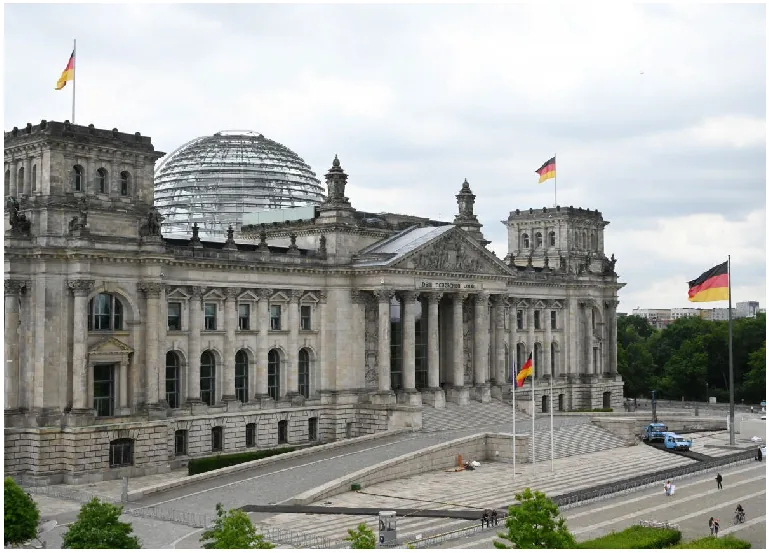
  25. Frage 55 Leben in der Demokratie

    Was zeigt dieses Bild?

    Abbildung zu Frage 55

    © Deutscher Bundestag/Achim Melde

    1. den Bundestagssitz in Berlin richtig
    2. das Bundesverfassungsgericht in Karlsruhe
    3. das Bundesratsgebäude in Berlin
    4. das Bundeskanzleramt in Berlin
    In English

    What does this picture show?

    1. A the seat of the Bundestag in Berlin
    2. B the Federal Constitutional Court in Karlsruhe
    3. C the Bundesrat building in Berlin
    4. D the Federal Chancellery in Berlin

    Unofficial translation, to help you read the question. Only the German wording counts in the exam.

    Warum? Das Reichstagsgebäude in Berlin mit der gläsernen Kuppel von Norman Foster. Seit 1999 tagt dort der Bundestag.

  26. Frage 56 Leben in der Demokratie

    Welches Amt gehört in Deutschland zur Gemeindeverwaltung?

    1. Pfarramt
    2. Ordnungsamt richtig
    3. Finanzamt
    4. Auswärtiges Amt
    In English

    Which office is part of local government in Germany?

    1. A parish office
    2. B public order office (Ordnungsamt)
    3. C tax office
    4. D foreign office

    Unofficial translation, to help you read the question. Only the German wording counts in the exam.

    Warum? Das Ordnungsamt gehört zur Gemeinde. Das Finanzamt ist Landesbehörde, das Auswärtige Amt Bundesbehörde, das Pfarramt gar keine Behörde.

  27. Frage 57 Leben in der Demokratie

    Wer wird meistens zur Präsidentin/zum Präsidenten des Deutschen Bundestages gewählt?

    1. die/der älteste Abgeordnete im Parlament
    2. die Ministerpräsidentin/der Ministerpräsident des größten Bundeslandes
    3. eine ehemalige Bundeskanzlerin/ein ehemaliger Bundeskanzler
    4. eine Abgeordnete/ein Abgeordneter der stärksten Fraktion richtig
    In English

    Who is usually elected President of the German Bundestag?

    1. A the oldest member of parliament
    2. B the Minister-President of the largest Bundesland
    3. C a former Federal Chancellor
    4. D a member of the largest parliamentary group

    Unofficial translation, to help you read the question. Only the German wording counts in the exam.

    Warum? Nach der Tradition stellt die stärkste Fraktion die Bundestagspräsidentin oder den Bundestagspräsidenten.

  28. Frage 58 Leben in der Demokratie

    Wer ernennt in Deutschland die Ministerinnen/die Minister der Bundesregierung?

    1. die Präsidentin/der Präsident des Bundesverfassungsgerichtes
    2. die Bundespräsidentin/der Bundespräsident richtig
    3. die Bundesratspräsidentin/der Bundesratspräsident
    4. die Bundestagspräsidentin/der Bundestagspräsident
    In English

    Who appoints the ministers of the federal government in Germany?

    1. A the President of the Federal Constitutional Court
    2. B the Federal President
    3. C the President of the Bundesrat
    4. D the President of the Bundestag

    Unofficial translation, to help you read the question. Only the German wording counts in the exam.

    Warum? Ernannt werden die Ministerinnen und Minister von der Bundespräsidentin oder dem Bundespräsidenten — auf Vorschlag der Kanzlerin oder des Kanzlers. Art. 64 GG

  29. Frage 59 Leben in der Demokratie

    Vor wie vielen Jahren gab es erstmals eine jüdische Gemeinde auf dem Gebiet des heutigen Deutschlands?

    1. vor etwa 300 Jahren
    2. vor etwa 700 Jahren
    3. vor etwa 1150 Jahren
    4. vor etwa 1700 Jahren richtig
    In English

    How many years ago was there first a Jewish community in the area of present-day Germany?

    1. A about 300 years ago
    2. B about 700 years ago
    3. C about 1150 years ago
    4. D about 1700 years ago

    Unofficial translation, to help you read the question. Only the German wording counts in the exam.

    Warum? Ein Erlass Kaiser Konstantins von 321 n. Chr. erwähnt eine jüdische Gemeinde in Köln. Das ist der älteste bekannte Beleg, also rund 1700 Jahre.

  30. Frage 60 Leben in der Demokratie

    In Deutschland gehören der Bundestag und der Bundesrat zur …

    1. Exekutive.
    2. Legislative. richtig
    3. Direktive.
    4. Judikative.
    In English

    In Germany, the Bundestag and the Bundesrat belong to the …

    1. A executive.
    2. B legislature.
    3. C "directive".
    4. D judiciary.

    Unofficial translation, to help you read the question. Only the German wording counts in the exam.

    Warum? Bundestag und Bundesrat machen die Gesetze und gehören damit zur Legislative.

Fragen und Abbildungen aus dem amtlichen Gesamtfragenkatalog des Bundesamtes für Migration und Flüchtlinge, Stand 2025-05-07. LangNation ist ein unabhängiges Lernangebot und steht nicht in Verbindung mit dem Bundesamt für Migration und Flüchtlinge.